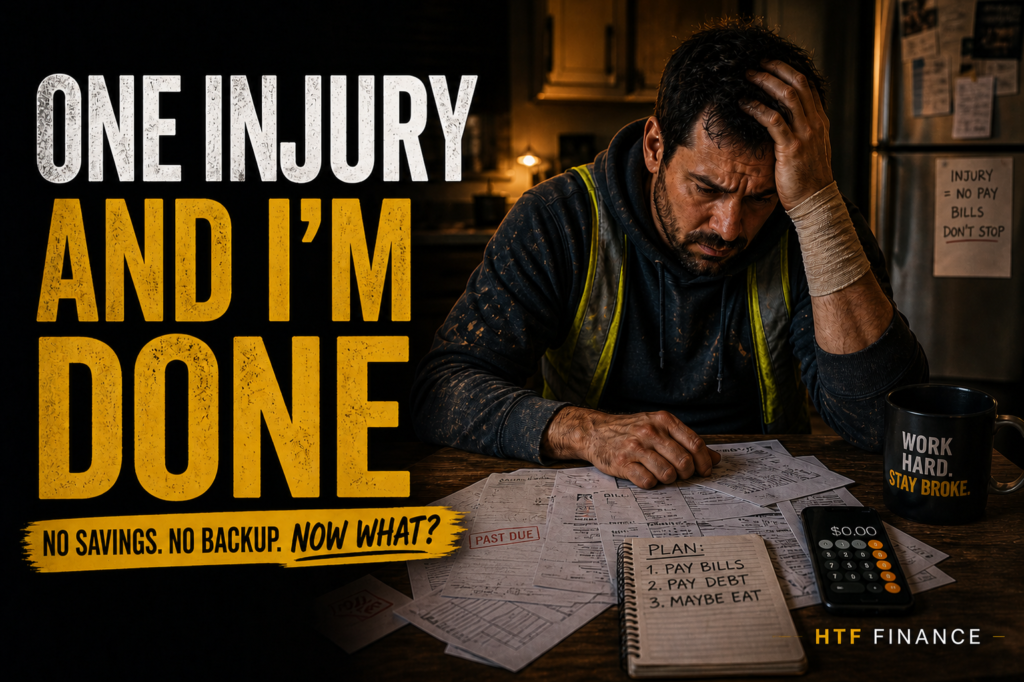

You’re working your body or your mind into the ground every single day. Warehouse shifts. Deliveries in any weather. Lifting, cleaning, building, caring. And at the end of it, you’re still behind — on bills, on rent, maybe on everything. Your credit score feels like one more thing the system uses against you.
I know what it’s like to look at a credit score and feel like it’s just one more thing the system built to keep you from getting ahead. You’re doing everything you can — paying what you can, when you can — and the number still doesn’t move. Or it moves the wrong way.
Here’s the truth nobody in finance bothers to say plainly: you can raise your credit score without extra money, without a financial advisor, and without understanding every piece of fine print. It’s slow, but it works. And in 2026 — with prices still brutal, jobs uncertain, and a lot of lenders tightening up — a better credit score is one of the few things that can actually open a door for you.
This isn’t theory. This is what actually moves the number.
Check out our money basics as well as our 6 Month Stability Plan tool for help getting started.
Free HTF advice
Trying to get your money and career unstuck?
I’m Greg from HTF Finance. I send practical, no-BS advice for working adults who are tired of being told to “just budget better” or “just go back to school” by people who have clearly never had rent, kids, car trouble, and a back that sounds like a haunted staircase.
Join the list for free career path breakdowns, simple money moves, early access to new guides, and first notice when the HTF community opens.
No spam. No lectures. No pretending a side hustle and a spreadsheet can fix a paycheck that is too small.
Why Is My Credit Score So Low If I’m Paying My Bills?
This is one of the most common frustrations, and it’s completely valid.
Your credit score isn’t just about whether you pay. It’s about how you pay, how much of your available credit you’re using, how long you’ve had accounts, and what kinds of debt you carry. If you’re leaning heavily on one card or a store credit line to get through the month, that alone can tank your score even if you never miss a payment.
The number is built by three main bureaus — Equifax, Experian, and TransUnion — and they don’t always agree. You have a right to check all three for free once a year at AnnualCreditReport.com. Do it. Errors are common, and an error can cost you 50 to 100 points you never deserved to lose.
What Actually Moves a Credit Score Fast?
The two biggest factors in your score are:
1. Payment history (35% of your score) Late payments hurt you hard and stay on your report for seven years. If you’ve got any accounts that have gone to collections, those are dragging your score down more than almost anything else.
2. Credit utilization (30% of your score) This is the ratio of how much credit you’re using versus how much you have available. If your credit card limit is $1,000 and you owe $800, that’s 80% utilization — and that’s killing your score. Getting that number under 30% is one of the fastest legitimate moves you can make.
If you’re struggling paycheck to paycheck, this feels impossible. But even calling your card company and asking for a limit increase (without spending more) drops your utilization percentage immediately. Many issuers will approve this if you’ve had the card for a year and haven’t missed payments.
Can I Raise My Credit Score With No Extra Money?
Yes — and here’s how.
Dispute errors on your credit report. Pull your free reports. Look for accounts that aren’t yours, payments marked late that weren’t, or debts you already paid that still show up as open. Dispute them directly with the bureaus online. Removing even one incorrect negative item can raise your score by 20 to 50 points.
Become an authorized user. If you have a family member or close friend with good credit who trusts you, ask them to add you as an authorized user on an old card with a low balance. You don’t even need to use the card. Their good history shows up on your report.
Don’t close old accounts. That old store card you never use? Keep it open. Closing it shrinks your total available credit and can hurt your score.
Set up autopay for the minimum. Even if it’s just the minimum payment, never being late again is the most important thing you can do for your score over the next 12 months.
Work with HTF
Need a real plan with step-by-step guidance?
If you’re trying to change careers, fix your money, or both at the same time, you probably don’t need another lecture about discipline. You need someone to help you look at the actual numbers, the actual job options, and the next step that won’t make your life harder.
That’s what Hit The Fan coaching is for. Work with Greg on the 6-Month Stability Plan, one-on-one coaching, or a realistic no-degree career path that fits your actual life.
No lectures. Just the next better step.
How Long Does It Take to Raise Your Credit Score?
Realistically, you can see movement in 30 to 90 days if you fix errors or reduce utilization. Rebuilding from a low score (below 580) to a fair score (580–669) typically takes 6 to 12 months of consistent on-time payments and careful account management.
Nobody’s going to hand you a 720 score in a month. Anyone promising that is lying to you. But 30 to 50 points in 3 to 6 months is achievable without spending anything you don’t already have.
What If I Have Collections or Old Debt?
This is where it gets complicated and where a lot of advice on the internet goes wrong.
Do not pay old debt without understanding your rights first. Depending on the age of the debt and your state’s statute of limitations, paying an old collection account can actually restart the clock and make it worse. Read up on the Fair Debt Collection Practices Act (FDCPA) or call a nonprofit credit counselor first.
Nonprofit credit counseling is free. The National Foundation for Credit Counseling (NFCC) at nfcc.org can connect you with a real counselor at no cost. They’re not trying to sell you anything. They help people in exactly your situation every day.
If a collection is recent, you can sometimes negotiate a “pay for delete” — where the collector agrees to remove the account from your report in exchange for payment. Get this in writing before you pay a single dollar.
And if you’re thinking the real fix isn’t just your credit score but the job putting you in this position — we’ve written a guide on changing careers without a degree for people in exactly that spot.
Is a Secured Credit Card Worth It?
If you have no credit or very bad credit and can’t qualify for a regular card, a secured card is one of the most reliable ways to build your score from the ground up.
You put down a deposit — usually $200 to $500 — and that becomes your credit limit. Use it for one small thing every month (gas, a grocery run), pay it off in full, and in 12 to 18 months you’ll have a solid payment history.
The best secured cards have no annual fee or a very small one. Discover it Secured and cards from local credit unions are usually the best options for people who need to watch every dollar.
What About Credit Repair Companies?
Skip them. Legally, you cannot pay someone to do anything for your credit that you cannot do yourself for free. Most of what they offer is disputing errors — which you can do on your own through the bureau websites. Some of these companies charge $50 to $150 a month for years and deliver nothing.
Use that money to pay down a balance instead.
The Honest Bottom Line
Your credit score is not a judgment of your worth as a person. It’s a number built by a system that wasn’t designed with your life in mind. But it still affects your rent, your car payments, your insurance rates, and whether anyone will lend to you in an emergency.
You don’t have to be in a good financial position to start improving it. You just have to be consistent. On-time payments, lower utilization, no new debt you don’t need, and a clean report with no errors — that’s the whole game.
It won’t happen overnight. But six months from now, you could be in a meaningfully different place.
Work with HTF
Need a real plan with step-by-step guidance?
If you’re trying to change careers, fix your money, or both at the same time, you probably don’t need another lecture about discipline. You need someone to help you look at the actual numbers, the actual job options, and the next step that won’t make your life harder.
That’s what Hit The Fan coaching is for. Work with Greg on the 6-Month Stability Plan, one-on-one coaching, or a realistic no-degree career path that fits your actual life.
No lectures. Just the next better step.
Frequently Asked Questions
The fastest free moves are disputing errors on your credit report and reducing your credit utilization ratio by asking for a credit limit increase without spending more. These require no cash and can show results within 30 to 60 days.
Most landlords and lenders look for a score of at least 580 to 620 for basic approval, though better rates start at 670. A score under 580 doesn’t mean automatic rejection, but it usually means higher deposits or rates.
No. Checking your own score is called a soft inquiry and has zero impact on your score. Only hard inquiries — like when a lender formally checks your credit for a loan application — can lower your score slightly.
Late payments remain on your credit report for seven years from the original missed payment date. However, their negative impact decreases over time. A late payment from five years ago hurts your score far less than one from six months ago.
Yes. The National Foundation for Credit Counseling offers free or low-cost counseling. You can also dispute errors yourself directly through Experian, Equifax, and TransUnion’s websites at no charge. You do not need to pay a credit repair company.
Aim to keep your credit utilization below 30% across all cards. Under 10% is even better. If your card has a $1,000 limit, try to keep your balance under $300 at any time — especially right before your statement closes.
No. Collection accounts fall off your credit report after seven years. In the meantime, you may be able to negotiate a pay-for-delete agreement, where the collector removes the account in exchange for payment. Always get any such agreement in writing before paying.
Secured credit cards are the most accessible option for people with bad credit or no credit history. You provide a cash deposit as collateral, and that amount becomes your credit limit. Using one responsibly for 12 to 18 months can significantly improve your score.