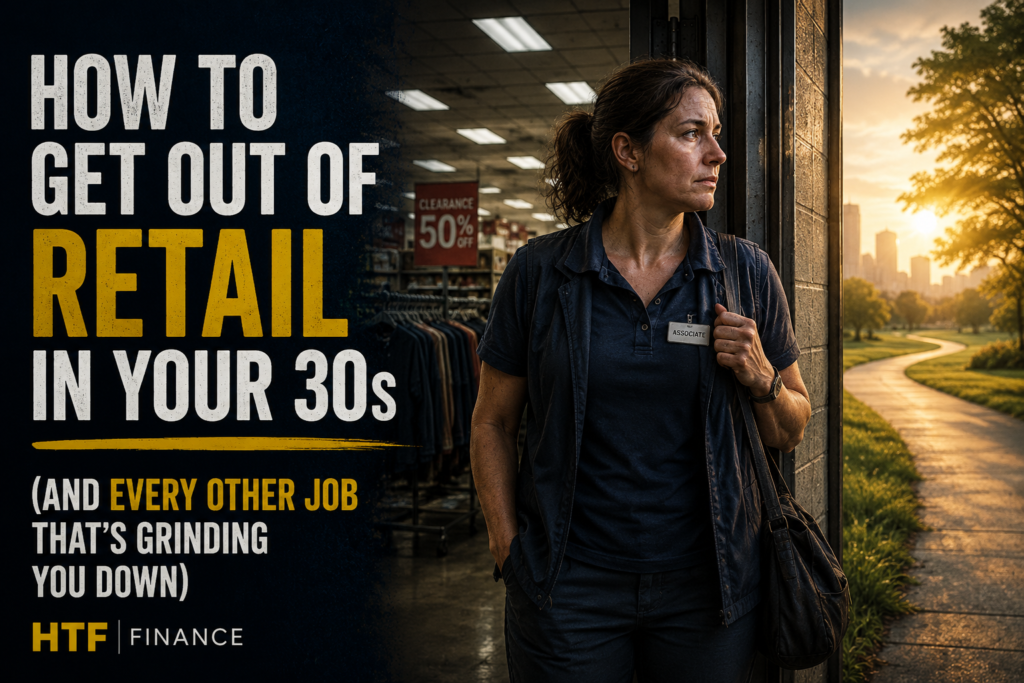

If you hate your warehouse job, I get it. I get it because I lived it.
I spent more than 20 years in warehouses. For a long time, I thought physical labor was just what I was built for. I thought it was my only option. With no degree. No savings. Barely anything in retirement. Bills due. Body getting older. One injury away from medical debt, no job, and a full financial circus with no tent. How was I supposed to get out of this hole? I had nothing.
Eventually, after a medical scare, I had to admit the thing I did not want to admit: This path was not going to hold forever, and I’d end up dead if I let it.
So if you are standing in a warehouse right now thinking, “I cannot do this for another 20 years,” you are not being dramatic. You’re probably right.
The good news is that warehouse experience is not useless. It can lead to better roles in logistics, dispatch, inventory, safety, warehouse office work, tech sales, IT support, CDL, maintenance, or other career paths that do not require a four-year degree. The goal is not to magically become a new person by next Tuesday.
The goal is to find a better next step.
Free HTF advice
Trying to get your money and career unstuck?
I’m Greg from HTF Finance. I send practical, no-BS advice for working adults who are tired of being told to “just budget better” or “just go back to school” by people who have clearly never had rent, kids, car trouble, and a back that sounds like a haunted staircase.
Join the list for free career path breakdowns, simple money moves, early access to new guides, and first notice when the HTF community opens.
No spam. No lectures. No pretending a side hustle and a spreadsheet can fix a paycheck that is too small.
Takeaways
- Hating your warehouse job does not mean you hate work. It may mean the work is no longer sustainable.
- Warehouse experience can transfer into logistics, dispatch, safety, inventory, tech sales, CDL, IT support, warehouse admin, and other no-degree paths.
- Before you pay for a course or certificate, figure out what problem you are actually trying to solve.
- Your main issue may be physical strain, low pay, bad hours, no growth, or feeling trapped.
- You do not need a perfect dream job. You need a realistic next move.
- The first step is not quitting. The first step is building a plan that fits your actual life.
First, Figure Out What You Actually Hate
“I hate my warehouse job” can mean a lot of things. Before you pick a new path, get honest about what you are trying to escape.
Ask yourself:
- Do I hate the physical work?
- Do I hate the pay?
- Do I hate the hours?
- Do I hate the managers?
- Do I hate the lack of growth?
- Do I hate the feeling that I am getting older but not getting anywhere?
- Do I hate this specific warehouse, or am I done with warehouse work completely?
Or to be fair, all of it. If the company is the problem, maybe you need a different career entirely. If the pay is the problem, maybe you need to move toward supervisor, CDL, maintenance, tech sales, logistics, or another higher-paying path. If your body is the problem, you need to get serious about moving off the floor.
Warehouse Work Can Make You Feel Stuck
Warehouse work can mess with how you see yourself. After years of it, you start thinking, “This is what I do. This is all I know. This is all I can get.” And that belief gets heavy. You watch people online talk about career changes like it is simple. Just network. Just go back to school. Just take six months off and upskill. Sure. Great. I will do that right after I pay rent with dreams and feed my family with LinkedIn endorsements.
Most advice is written for people who already have options. If you’re asking the question of how, you probably don’t have them. Or at least, no one told you where to look. A lot of warehouse workers are capable of more engaging, better-paying, more stable work. They just do not have the tools, the language, the connections, or the money to get there.
So let’s fix it.
What Warehouse Experience Actually Proves
If you have worked in a warehouse, you probably have more usable experience than you think.
Warehouse work can prove that you know how to:
- show up consistently
- work under pressure
- follow systems
- hit numbers
- handle inventory
- use scanners or warehouse software
- solve problems fast
- work with a team
- deal with shipping and receiving
- follow safety rules
- train new people
- communicate with drivers, vendors, leads, and managers
- keep moving when the day is already too long
That is real experience. The problem is selling your self. You’re probably so used to putting yourself down, or thinking you have no skills, that when you write a resume, it’s, I handle boxes, not I know logistics. If this is your resume, it’s part of the problem.
It isn’t lying when you’re talking employer. No one has any idea who you were before you stepped in the door, don’t sell them on your worst days.
Best Jobs to Move Into From Warehouse Work
There is no one perfect path out. Anyone who says there is probably has a course to sell you and a stupid amount of confidence.
The better question is:
What kind of better do you need? Better pay? Less physical work? Better hours? More growth? Remote work? A career instead of another job that eats your spine? Here are some realistic options.
| Inventory coordinator | Less floor work, more systems | Medium | No |
| Shipping and receiving clerk | Similar field, more admin | Medium | No |
| Dispatcher | Desk work, logistics, fast pace | Low | No |
| Logistics coordinator | Office-based supply chain work | Low/Medium | No or preferred |
| Warehouse lead or supervisor | More pay without fully leaving | Medium | No |
| Safety coordinator | Less lifting, more compliance | Low/Medium | No |
| Tech sales | Higher income, remote potential, people-focused work | Low | No |
| IT support | Desk-based career change | Low | No, certs help |
| CDL driver | Higher pay, still demanding | Medium | No degree |
| Maintenance technician | More skilled hands-on work | Medium/High | No, training helps |
| Healthcare admin | Desk job, stable field | Low | Usually no for entry-level |
The best path depends on your actual life. And for most, it’s more money. The High Paying Jobs page can give you a start.
Free HTF advice
Trying to get your money and career unstuck?
I’m Greg from HTF Finance. I send practical, no-BS advice for working adults who are tired of being told to “just budget better” or “just go back to school” by people who have clearly never had rent, kids, car trouble, and a back that sounds like a haunted staircase.
Join the list for free career path breakdowns, simple money moves, early access to new guides, and first notice when the HTF community opens.
No spam. No lectures. No pretending a side hustle and a spreadsheet can fix a paycheck that is too small.
If Your Body Is the Problem
If your body is already giving you warnings, listen. I ignored mine for a long time because that is what a lot of us are trained to do. You push through. You keep going. Don’t.
Warehouse work can wear you down through:
- standing all day
- repetitive lifting
- bending and twisting
- walking on concrete
- long shifts
- overnight hours
- mandatory overtime
- equipment strain
- injury risk
- never really recovering before the next shift
If your main concern is physical wear and tear, you probably want to look at paths that move you off the floor.
Good options may include:
- dispatch
- logistics coordinator
- inventory control
- safety coordinator
- warehouse admin
- purchasing assistant
- tech sales
- IT support
- healthcare admin
- customer support for logistics or supply companies
You might still work hard. Desk jobs are not magical nap rooms with dental insurance, but if you take care of yourself, and pick the right place, you should be feeling a lot better.
If Money Is the Problem
Low pay is not just annoying. It keeps you trapped. No savings. No cushion. No retirement. No room for mistakes. One flat tire becomes a financial event. One medical bill will put you into bankruptcy.
If money is the main issue, you might consider paths with higher earning potential, such as:
- tech sales
- CDL
- maintenance technician
- warehouse supervisor
- logistics coordinator
- operations coordinator
- skilled trades
- equipment repair
- IT support
- sales roles connected to industrial, supply, or construction products
Tech sales is one path worth looking at if you are good with people, can handle rejection, and want something more mentally engaging. That was the route I took. I started researching online, using free resources, and eventually took a course in tech sales. It took months. It was not instant. It was not one of those “make six figures from your couch by blinking confidently” scams. But it gave me a way to move from physical work into a career path.
Eventually, I landed a fully remote sales role with a base salary higher than any job I had ever had before. Because I finally found a path that did not require a degree, did not require going broke for school, and actually matched some skills I already had. Talking to people. Solving problems. Handling pressure. Following up. Not falling apart because someone said no.
Warehouse work teaches more of that than people realize.
If You Want Something More Engaging
Sometimes people assume warehouse workers only care about getting out because the job is hard physically. But a lot of people also want work that uses their brain more. Work where the day is not just move this, scan that, lift this, count that, repeat until your soul quietly leaves through the loading dock. Wanting something more engaging that fufills you is important.
If you want work that feels more like a career, look at paths where you can build skills over time:
- tech sales
- IT support
- logistics coordinator
- operations coordinator
- safety coordinator
- healthcare admin
- supply chain support
- project coordinator
- customer success
- inside sales
- trade sales or distributor sales
These can give you more room to grow. And yes, some of them still start entry-level. That is fine. Entry-level with a ladder is different from entry-level with a locked door and a manager named Kyle who says “teamwork” while denying PTO (sorry to all the Kyle’s that do approve PTO).
If You Have No Degree
Good. Then we are talking about the actual situation. A lot of career advice acts like “go back to school” is a casual suggestion, like picking up milk. Go back to school with what money? What time? What childcare? What energy after a 10-hour shift? What backup plan if it does not lead to a better job? For many people, a four-year degree is not the first move.
It might be a future move. Maybe. But your first move should usually be cheaper, faster, and tied to a real job title. That may mean:
- a short certificate
- a low-cost online course
- a resume rewrite
- job shadowing
- applying for internal roles
- learning Excel
- learning CRM tools
- getting OSHA 10
- trying Google IT Support
- researching tech sales
- looking at dispatch or logistics roles
- studying job postings before paying for anything
For exact degrees, and exact paths check out the Warehouse Escape Track on the site.
What Not to Waste Money On Yet
When you are desperate to get out, everything starts looking like an escape hatch. A bootcamp. A certificate. A course. A coaching program. A guy on YouTube standing in front of a rented Lamborghini telling you the secret is mindset. Please do not hand these people your rent money.
Before you pay for anything, ask:
- What job title does this lead to?
- Are employers near me asking for this?
- Is this required, preferred, or just nice to have?
- How long will it take?
- What does it cost?
- What is the realistic starting pay?
- Can I do a cheaper version first?
- Does this solve my actual problem?
- Am I buying this because it is smart, or because I am panicking?
Before I took a tech sales course, I spent time researching. I used free resources. I looked at what the job actually involved. I tried to understand whether I could see myself doing it.
That is the move. Research first. Spend later.
Best First Steps If You Hate Warehouse Work
You do not need a full life transformation by Friday. You need one useful step.
Here is a simple first-week plan.
Day 1: Name the real problem
Write down your biggest reason for wanting out.
Pick one:
- my body cannot keep doing this
- I need more money
- I need better hours
- I want more engaging work
- I feel stuck
- I need a career path
- I need remote work
- I need benefits
- I need to stop living one emergency away from disaster
You can have more than one. Most people do. But pick the loudest one first.
Day 2: Write down what you actually do
Not your job title. Your actual work.
Examples:
- handle inventory
- use scanners
- operate equipment
- train new hires
- coordinate with drivers
- track shipments
- solve order issues
- meet quotas
- manage time under pressure
- work with safety procedures
- help leads or supervisors
- deal with schedule changes
- communicate across teams
This is the start of your resume rewrite.
Day 3: Search job titles, not dreams
Search for realistic bridge jobs.
Try:
- inventory coordinator
- logistics coordinator
- dispatcher
- warehouse admin
- shipping clerk
- receiving coordinator
- safety assistant
- operations assistant
- inside sales representative
- tech sales development representative
- IT support specialist
- customer success associate
Do not worry about applying yet. Just look. You are gathering evidence that you can make your resume sound like what they’re looking for, and see which ones feel right.
Day 4: Look for repeated requirements
Read five to ten job postings.
Look for what keeps showing up:
- Excel
- CRM experience
- customer service
- OSHA
- dispatch software
- inventory systems
- communication skills
- sales experience
- troubleshooting
- scheduling
- data entry
- warehouse management systems
This tells you what skill gap matters.
Day 5: Pick one path to research deeper
Choose one.
Examples:
- tech sales
- IT support
- logistics
- dispatch
- healthcare admin
- safety
- CDL
- warehouse supervisor
- maintenance
Spend one hour researching:
- starting pay
- training cost
- job requirements
- schedule
- remote options
- whether you can picture yourself doing it
Day 6: Fix one piece of your resume
Do not rewrite the whole thing, and do not completely write it with AI. But do head on over to the free Claude or ChatGPT and throw in the jobs you’re looking at, and your current resume or work history, and have it explain to you what should be on there, and how to make what you do match the job you’re looking for. It’ll inspire you at least.
Day 7: Take one small action
Pick one:
- apply to one bridge job
- save five job postings
- ask about internal openings
- make a list of companies nearby
- start a free intro course
- watch videos about tech sales or IT support
- update your resume summary
- talk to someone already in the role
- look up affordable certificates
Should You Quit Your Warehouse Job?
Usually, no. If the job is unsafe or destroying your health, that changes things. But for most people, quitting without a plan can turn a bad situation into a financial house fire. A better move is to use the job as funding while you build the exit. That might mean staying for now while you:
- research paths
- update your resume
- take a low-cost course
- apply to bridge roles
- build basic skills
- save even a tiny emergency cushion
- look for internal transfers
- get clear on your next move
The goal is not to be loyal to a warehouse that would replace you before your badge stopped working.
When It Is Time to Get Serious About Leaving
You should probably take your exit plan seriously if:
- your body is not recovering anymore
- you are afraid one injury will ruin you financially
- you have no savings and no room for emergencies
- your retirement is basically a decorative account
- the job has no growth path
- the schedule is hurting your family life
- the pay cannot cover basic living costs
- you are using every day off to recover
- you keep thinking, “I cannot do this for another five years”
That last one is important.
Because five years arrives fast.
One day you are 25 and tired. Then you blink and you are 38, your back sounds like a haunted staircase, and retirement looks like “work until lunch on the day of the funeral.”
Dark? Yes.
Also, why we are having this conversation.
You Are Not Stuck Because You Are Stupid
A lot of people in warehouse work have been quietly trained to believe this is the best they can do. That is not true.
What is true is that it is hard to find better options when you are exhausted, underpaid, and surrounded by advice written for people with money, time, degrees, and a shocking number of linen shirts.
You may not need a degree. You may need:
- a clearer path
- better information
- a cheaper first step
- someone to explain the options
- a resume that translates your experience
- a plan that does not require quitting tomorrow
- proof that people like you can move into something better
I worked with a lot of people over the years who were smarter and more capable than they believed. They just thought the door was locked. Sometimes it is not locked. Sometimes nobody told you where the door was. I tell you where the door is.
The Real Goal Is a Better Next Step
You do not need to find your dream job today. Honestly, “dream job” is suspicious anyway. Most people’s dream does not involve quarterly meetings or password resets. You need a better next step.
That might be:
- moving from warehouse floor to inventory
- applying for dispatch roles
- learning tech sales basics
- starting an IT support certificate
- looking at healthcare admin
- moving into safety
- applying for logistics coordinator jobs
- using your warehouse knowledge in sales or operations
- getting a job that pays more and hurts less
Want the Full Warehouse Career Change Path?
If you want a deeper breakdown of realistic options, costs, training paths, and job titles, start with our full guide to career change from warehouse work.
You do not need to have the whole thing figured out today, but this can get you closer.
Work with HTF
Need a real plan with step-by-step guidance?
If you’re trying to change careers, fix your money, or both at the same time, you probably don’t need another lecture about discipline. You need someone to help you look at the actual numbers, the actual job options, and the next step that won’t make your life harder.
That’s what Hit The Fan coaching is for. Work with Greg on the 6-Month Stability Plan, one-on-one coaching, or a realistic no-degree career path that fits your actual life.
No lectures. Just the next better step.
FAQ
You can move into roles like inventory coordinator, dispatcher, logistics coordinator, safety assistant, warehouse admin, tech sales, IT support, CDL driving, maintenance, or healthcare admin. The best choice depends on whether you need better pay, less physical work, better hours, or a full career change.
Start by identifying what you want to change, then look for bridge roles that use your warehouse experience. Good options include logistics, dispatch, inventory, safety, operations, tech sales, IT support, and healthcare admin. You may need a low-cost certificate or course, but do not pay for anything until you know what job title you are aiming for.
Warehouse experience can transfer into inventory, shipping and receiving, dispatch, logistics, warehouse supervision, safety, operations, tech sales, customer support, and supply chain roles. You may need to rewrite your resume so employers can see the skills hiding behind the job title.
Yes. Warehouse work can be physically demanding, repetitive, stressful, and hard on your schedule. Hating the job does not mean you are lazy. It may mean the work is no longer sustainable for your body, finances, or future.
Usually, no. If possible, use your current job as income while you build your exit plan. Research career paths, update your resume, apply to bridge roles, and look for low-cost training before quitting. If the job is unsafe or your health is at risk, that may change the timeline.
Tech sales can be a good option if you are comfortable talking to people, handling rejection, learning new products, and following up consistently. It does not usually require a degree, and some roles can be remote. It does take work to learn, but it can offer higher pay and a more career-based path than physical labor.
The fastest path is usually a bridge job close to your current experience, such as inventory coordinator, dispatcher, shipping and receiving clerk, warehouse admin, logistics assistant, or warehouse lead. Bigger pivots like tech sales, IT support, or healthcare admin may take more preparation but can offer better long-term options.
Then your plan needs to be low-risk. Do not quit without a backup if you can avoid it. Start with free research, resume updates, job postings, internal transfer options, and low-cost skills. Your first goal is not to blow up your life. It is to build a way out that does not make the financial stress worse.