
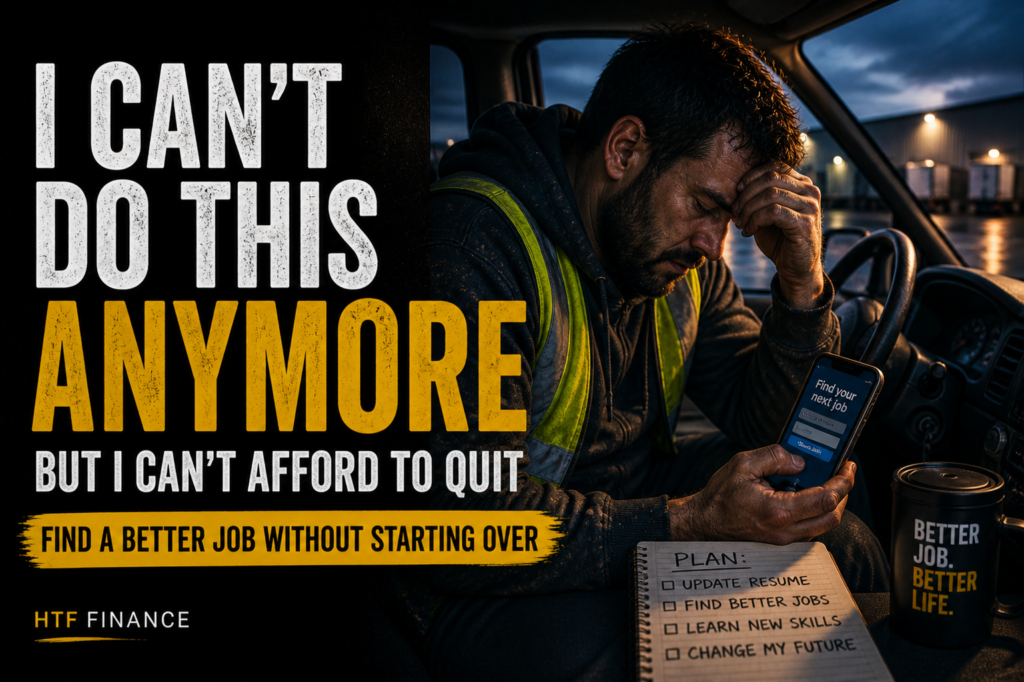
If you’re in your 30s or 40s, working a job that’s breaking your body or your mind, living paycheck to paycheck, and wondering if there’s any way out — this is written for you. Not for someone with a college degree and a savings account. For you.
The job market in 2026 is rough. Inflation hasn’t fully let up, layoffs hit hard across industries, and a lot of the “just apply online” advice doesn’t work when you’re exhausted after a 10-hour shift and can’t afford to lose your current income while hunting for something better. You need real strategies, not recycled career coach fluff.
Is It Even Worth Looking for a New Job Right Now?
Yes. But you have to be smart about it.
The biggest mistake people in physically demanding jobs make is thinking they need to stay put because “at least it’s stable.” Warehouse work, delivery routes, care work, retail, construction — these jobs wear you down fast. By your mid-40s, your body pays a price that no hourly wage covers. The question isn’t whether you can afford to look for something else. It’s whether you can afford not to.
The economy is hard right now, but employers are still hiring. What’s changed is where the jobs are and how you find them.
Check out our Career Hub or head over to some $100K+ careers with no degree required.
Free HTF advice
Trying to get your money and career unstuck?
I’m Greg from HTF Finance. I send practical, no-BS advice for working adults who are tired of being told to “just budget better” or “just go back to school” by people who have clearly never had rent, kids, car trouble, and a back that sounds like a haunted staircase.
Join the list for free career path breakdowns, simple money moves, early access to new guides, and first notice when the HTF community opens.
No spam. No lectures. No pretending a side hustle and a spreadsheet can fix a paycheck that is too small.
How Do You Job Search When You’re Too Tired After Work?
You don’t need hours. You need 20 minutes and a phone.
Set aside 20 minutes before bed or during your lunch break. Use that time for one task only — update one section of your resume, apply to one job, or message one person. That’s it. Consistency beats marathon sessions every time.
Free tools that work on your phone: LinkedIn (free tier is enough), Indeed, and ZipRecruiter. Set up job alerts so opportunities come to you instead of you chasing them.
What Jobs Can You Actually Get Without a Degree in 2026?
More than people think. Employers in several industries are dropping degree requirements because they can’t fill positions.
Strong options that pay above $40k in many areas and don’t require a four-year degree:
- HVAC and electrical apprenticeships — many are paid while you train
- CDL truck driving — if you already drive deliveries, this is an upgrade worth considering
- Medical billing and coding — remote, certificate-based, done in months online
- Property management assistant roles — often come with housing benefits
- Logistics coordination — a step up from warehouse floor, often internal promotions
- Solar installation — one of the fastest-growing trades in the country
If you’re already in construction, warehousing, or logistics, you have skills that translate. You just need to know how to name them on paper.
If you’re worried you can’t afford to go back to school, check out this blog.
How Do You Write a Resume When You’ve Only Had Hourly Jobs?
You focus on what you actually did, not your job title.
Instead of writing “Warehouse Worker,” write what that meant: “Managed inventory for 500+ SKUs, met daily pick-rate targets, trained 3 new team members.” That’s real experience. That’s what hiring managers want to see.
If writing feels hard, use a free AI tool to help you put your experience into words. Type out what you do at work in plain language, ask it to turn that into resume bullet points, and then edit it to sound like you. It’s not cheating — it’s using available tools.
Work with HTF
Need a real plan with step-by-step guidance?
If you’re trying to change careers, fix your money, or both at the same time, you probably don’t need another lecture about discipline. You need someone to help you look at the actual numbers, the actual job options, and the next step that won’t make your life harder.
That’s what Hit The Fan coaching is for. Work with Greg on the 6-Month Stability Plan, one-on-one coaching, or a realistic no-degree career path that fits your actual life.
No lectures. Just the next better step.
Can You Get Free Job Training Without Quitting Your Current Job?
Yes, and most people don’t know about it.
- Google Career Certificates on Coursera — IT support, project management, data analytics. Financial aid is available.
- Your state’s workforce development program — search “[your state] workforce development” or visit your local American Job Center. Many offer free training, resume help, and even childcare assistance while you train.
- Community colleges — many offer evening and weekend certificate programs under $3,000 total, and payment plans exist.
- Union apprenticeships — if you’re in construction or a trade, a union apprenticeship can double your income over five years.
None of these require you to quit your job first.
What If You’re in Debt and Can’t Afford to Take a Pay Cut?
Don’t take a pay cut. Look for lateral or upward moves only.
The goal isn’t to start over — it’s to take one step up. A care worker moving into a medical records role. A delivery driver getting a CDL and tripling their long-haul options. A retail supervisor moving into a logistics coordinator role. These are real transitions people make without losing income.
Also: check whether you qualify for any debt relief programs through your state or employer. Many large employers now offer student loan assistance and emergency funds that go unused because people don’t know they exist.
Before you make any move, see exactly where your money is going and what you’re actually earning per hour after taxes and bills — check out our 6-Month Plan tool here.
You’re Not Stuck. You’re Under-Resourced.
There’s a difference. Stuck means there’s no way out. Under-resourced means you haven’t had the right tools pointed in your direction yet.
If you’re in a hard job, in debt, in your 30s or 40s, and exhausted — you’re not behind. You’ve been surviving something most people wouldn’t last a week doing. That matters. And it translates into more transferable skills than you’ve been told.
Start small. One application. One search. One 20-minute window. The economy may be hard, but your options are not zero.
Work with HTF
Need a real plan with step-by-step guidance?
If you’re trying to change careers, fix your money, or both at the same time, you probably don’t need another lecture about discipline. You need someone to help you look at the actual numbers, the actual job options, and the next step that won’t make your life harder.
That’s what Hit The Fan coaching is for. Work with Greg on the 6-Month Stability Plan, one-on-one coaching, or a realistic no-degree career path that fits your actual life.
No lectures. Just the next better step.
Frequently Asked Questions
Workers over 35 without a degree should focus on transferable skills, apply directly to companies rather than only through job boards, look into paid apprenticeship programs in trades and healthcare, and use their state’s free workforce development services. Local American Job Centers offer no-cost resume help and career coaching.
The most effective approach is to set a small daily goal — 20 minutes, one application, one contact — rather than trying to do everything at once. Setting up job alerts on Indeed or LinkedIn sends opportunities directly to you so you’re not spending time searching from scratch every day.
The federal government funds workforce training through the American Job Centers network. Google Career Certificates offer financial aid. Many states have specific grants for workers in healthcare, IT, and the trades. Community colleges often have certificate programs under $3,000 with payment plans available.
Yes. Many industries now offer on-the-job training, paid apprenticeships, and short-term certificate programs that take months, not years. Healthcare support roles, logistics coordination, HVAC, and IT support are common career changes made by workers in their 40s with physical labor backgrounds.
Trades like HVAC, electrical, and plumbing regularly pay $50,000–$80,000 with experience. CDL truck drivers, solar installers, medical coders, and property managers often earn above $40,000. Union apprenticeships in construction and manufacturing frequently lead to wages well above this threshold within a few years.
By describing specific responsibilities in numbers and outcomes rather than generic titles. Mentioning equipment operated, team sizes, daily targets met, and safety records makes a resume stand out. Free AI writing tools can help put physical job experience into professional language quickly.